YOU COULD GET THIS FOR FREE

ONLINE PARTIES AND BRIDAL REGISTRY/BRIDAL SHOWERS: I am now offering a online parties, bridal registries, and showers. If you are a bride to be or someone who would like to host an online party, please convo me through Etsy, or email me at: aamilou@aol.com. I will give you a special code to use and have all of your guests use when they make their purchases. We will set up the dates for your show to run. As the hostess you will receive 20% of your total orders (Minimum sales amount must be at least $100.00), less shipping and tax, to apply toward free products. As the hostess or bride to be you will also receive the benefit of purchasing at wholesale prices for the party. This is a great way to get some of the items you would love to have, for free or at a discount. This is a great opportunity for the upcoming holiday shopping season. Your party may include items from my all of my shops:Take a look at this shop! , Shop here too! , and custom orders welcome too!

AmyWork for today 92009 001

Leave a Comment

Creating a Strie

Do you have walls with a lot of imperfections? Maybe you tried to remove old wallpaper and your walls were left damaged after that process? Faux wall treatments are a great way to restore beauty to your walls, at a minimal cost.

The technique I will discuss here requires lightweight joint compound, a large 12″ taping knife, wallpaper brush, and a small brush with the bristles cut short. If you would like to add your paint to the compound you may do so before starting the job. I normally just paint the walls after the joint compound has cured.

Prepare your walls by removing light switch and outlet covers. I would strongly recommend taping your woodwork around the doors, floors, and tape your ceiling. This will save clean up time after the technique has been completed. Make sure you use drop cloths to protect your floors. This project could be a little messy.

If you are going to add your paint before your begin, make sure you add it to the entire amount of compound you will be using. This will help to ensure your color remains consistent throughout the process. Make sure you mix it well. You might want to use a drill with a special piece attached just for mixing paint and similar liquids.

If you are not adding paint, your joint compound will typically dry white with a chalky sheen. I would recommend painting the walls once the compound has dried completely. This will make it easier to clean and will help protect the walls.

Work in sections sizes that you will be able to comfortably manage. I would apply the joint compound in small sections, run the brush through it and then move to the next section, unless there are more than one person doing the technique with you. It would be perfect to have one person apply the compound while the other one creates the texture.

You will begin by coating your surface with the joint compound. You will be using the tape knife to apply the compound to your walls. Skim the coat on the wall in a relatively thin fashion. It does not have to be perfect, but you do not want it to be thicker in some areas than in others. If you maintain consistency at this point you will obtain a nicer look.

The next step calls for the wallpaper brush to be used. Again, remember to work in small sections. Start from the top of the wall near a corner, pulling the brush from the ceiling down past the middle of the wall. Clean out the brush and proceed to repeat this technique, but this time you will start at the bottom pulling the brush up to meet and blend in the middle where you left off.

Use the small brush with the cut bristles when you need to fit in to tight spots. It is also a good tool to use when you are trying to fit in to the corners. It may also be used to clean up any access joint compound.

I would recommend allowing the joint compound to dry completely for at least 24 hours before you paint it. If you have added the paint already to the compound, still allow for drying time before you hang pictures and other home decor items to your walls.

If you are in doubt about being able to complete this technique in a pleasing manner,
go through the extra expense of buying practice boards. This treatment is harder to correct than just painting. I cannot say all you have to do is re-paint it. That will not do the trick. Practice before moving to your walls. You will be glad you did.

Amy

Leave a Comment

Sponging Your Walls

Sponging is probably one of the most well known faux techniques. Many are probably familiar with using a sponge to apply paint to the wall, but it may also be used in the reverse technique of removing paint. Create a neat look with one color or multiple colors.

The pictures attached show a wall base painted with semi-gloss paint. The paint used for the sponging was the same color, but a flat paint. This technique can be used to create a foiled look too. It is amazing how different the paints look, being different sheens, but the same color.

This is another technique where you will dilute the paint being used for sponging. You may be able to get away with only using a quart. Just remember if your paint begins to thicken, add more water. This will keep the paint from looking
like a blob on the wall.

Add a little water and stir the paint until thoroughly mixed. Keep adding water and stirring a little at a time. It is always easy to add more water than to correct it if you add too much. Your goal is to have an inky consistency.

Place a little paint on a plate when you are ready to begin. Wet your sponge and make sure you squeeze out the excess water. Place the surface of the sponge on top of the paint. Just get the paint on the surface, do not drench the sponge. You may want to tap the sponge on wadded up paper towels to make sure you remove the excess paint before place on the wall. Remember to change the position on the sponge often so that you will create a random look.

When you place the sponge on the wall, make sure you do not cover the paint underneath entirely. Start from the top and work your way down. Do not paint in a straight line down the wall. Move the sponge in small section. If you want to add another color, just repeat this step. If you feel the need to bring more of the first color out, sponge with that color again. It is important that you continue around the room and finish each color out before moving on to the next. This will keep all of the walls looking similar. If you try to finish one wall at a time when using multiple colors, it is very unlikely they will look the same. Also, if someone else is helping you sponge, make sure they do all of one color as you are doing all of another.

If you would like to do the reverse painting technique and use the sponge to remove the paint, paint the second color over the base color in small sections. It is important to work in small sections and in random areas as you move from the top of the wall to the floor. Once you have painted the second color in the small section, immediately place the sponge in the painted area and pull away from the wall. Repeat this, moving the sponge in different directions to avoid a creating a definite pattern. Once you have done this to the entire painted section, paint another section and repeat this process.

Depending on the look you are trying to achieve, there are many ways to do the sponging. There really is not a right and wrong way to do this. I would recommend practicing on small practice boards before moving to the wall. Remember, if you do not like the finished product, all you have to do is paint over it and start again. It really is just that easy!

Amy

Leave a Comment

Ragging Your Walls

Ragging is another easy faux treatment that may be used on many surfaces, including your walls. Turn your walls from plain to beautiful using a few different colors of paint, a few rags, and a paint brush. It really is as simple as that.

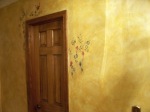
This painting technique may be painted over any type of sheen, but works well over semi-gloss and 100 % acrylic paint. In this technique, much like the color washing you will dilute your paint. This will allow the base color of the walls to show through.

Begin by diluting both shades of paint you are going to use in this technique. I normally choose two colors, but you certainly may use more if you like. I begin by choosing colors to coordinate with the base coat. In the sample given you will see a carmel brown. A slightly lighter golden brown color was chosen along with a white.

Start in a corner like you would the color washing technique. You will place a small amount of each color on the walls using a paint brush. Try to work in small areas at a time. No larger than about two feet in diameter. Do it in random shapes to avoid creating a pattern. Start at the top of a wall and move down toward the flower.

After you place the two colors of paint on the wall, pull some of the paint off the wall by placing the lint free rag on the painted area. You place it in the painted areas and pull straight up from the wall. Move your rag in different directions to deviate the design.

Rinse out the rag and ring it out well once it becomes too saturated with paint. This will allow your rag to pull the paint and create interesting designs. You may always add more paint to the walls if you do not like the look created.

As you continue to move around the room, your paint will start to thicken up. Add water to keep the inky consistency of the paint. If it gets too thick it will look more like a blob on the wall. You want to create visual interest. Your paint will be heavier in some areas, that’s okay, but you do not want it to look like it was put on too heavy in one spot. It should be pleasing to the eye.

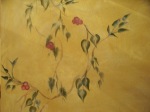
This is also a wonder technique to add further decorative painting to it. Hand painted vines and other designs look nice with faux painted walls. It really is an affordable way to add to your home decor or office decor, without spending a fortune.

Always remember, if you try it and do not like it you just have to paint over it. You never know, you just may love it! Surprise yourself and give it a try.

Amy

www.aressa.etsy.com2nd Shipment of Dog glasses 90309 projects 0242nd Shipment of Dog glasses 90309 projects 0252nd Shipment of Dog glasses 90309 projects 0262nd Shipment of Dog glasses 90309 projects 0272nd Shipment of Dog glasses 90309 projects 028

Leave a Comment

Color Washing Your Walls

Color washing is a nice technique to use over walls that are already painted. It is an easy way to change the look of any room without having to base paint. It is just the right touch to add life to any room.

This technique can be washed over any sheen of paint, however it seems to work best over flat paint. You will be using diluted paint to wash the walls with. It is important that you use a lint free rag to apply the paint.

This faux technique can be a little messy. Make sure you lay down a drop cloth while you are painting. It is very likely you will have drips while you are washing the walls.

You will begin this process by pouring a small portion of your paint into a small container that will be easy for you to work with. You will add a little water at a time. Each time you add water make sure you stir the paint well. Keep adding a little at a time until your paint is an inky consistency. As you paint you will find that consistency will start to thicken. You can add more paint or water as needed. It is important to keep the inky consistency so that paint will not be too thick when applied to your walls.

After diluting your paint you will be ready to begin. Use a rag that is easy for you to work with. I recommend a size that fits within the palm of your hand. This will make it easy to work with and help keep the dripping down.

Place the rag into the inky paint, getting the entire rag wet. Squeeze your rag to remove excess water and paint. Your rag will still be wet but not drenched. Start at one corner of the room and move around the room from one wall to the next. Begin at the top corner and work your way down to the bottom. You will wash the paint on the walls just as you would wash your walls with water. Do it in a random pattern so that you are not creating a definite pattern. You will have a varied amount of paint from once section to the next. This is the look your are trying to achieve.

If you need to touch up the paint in the future, just repeat this process. You will do it in smaller amounts a needed to complete the touch up. This is a nice technique to cover up imperfect walls.

Get your rag ready and begin to paint!!!

Amy011012007008

Leave a Comment

DO YOU KNOW HOW TO PUT ON A GREAT COCKTAIL PARTY?

Putting on a fun cocktail party is easier than you may think. You just have to have food, drinks, and friends to join in. Here are a few things to consider before you set your plans.

This type of party typically lasts between two to three hours. It has a different feel to it than having a regular party. It is a little more formal too.

The first thing to consider is how much ice you will need during the party. You will need ice for the drinks as well as for drinks to be kept cool in. Figure on having 1 lb of ice per person.

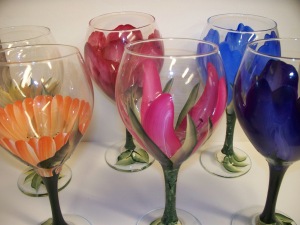
You can put on a cocktail party with just providing beer and wine, but typically you will have a larger variety of drink choices. Consider the different types of glasses you should have on hand. You will not only need beer and wine glasses, but straight sided highball glasses for tall drinks, tumblers for spirits and juices, and martini glasses. You could also consider having margarita glasses. Plan to have twice as many glasses as you will have guests.

Stock your bar in the following manner: Wine-Have 1 bottle for every two wine drinkers. Beer-Have 1 six pack for every two beer drinkers. Get a couple of different liquors which may be used to mix a variety of cocktails. These are some to consider: vodka, rum, gin, scotch, bourbon, whiskey, or tequila. Also, make sure you have other liquids to use as mixers such as orange juice, sodas, and tonics, as well as garnishes such as olives, lemons, and celery.

The next step is to prepare the menu you will be serving at the cocktail party. I would recommend sticking to light finger foods. Keep it simple! Try to offer a variety such as meat, veggies, hot, cold, and sweet. Estimate six bites per person, but have extras just in case. It is definitely better to have too much, than not enough!

You might consider serving coffee, tea, or soft drinks toward the end of the cocktail party. Be a responsible host, and make sure you have options lined up for those who are not able to drive. This might even include having local taxi service information available for your guests.

Leave a Comment

Creating the Look of Leather

Leather is popular amongst many people today. You often see this material used on sofas, car seats, and many other objects. It can be pricey to upgrade to leather instead of using cloth.

Have you ever considered using this material for other home decor objects? Well, now you can create the look of leather for a fraction of the cost. Using this faux technique will enable you to have this look on other items, not just your sofas. You can use it on your walls, tables, lamps, and whatever else you may find.

The look of leather combines two techniques, stippling and drybrushing. You will begin by basecoating your surface with black. Next, you will mix Raw Umber with a texture medium. You are going to use a dry mob brush for this next step. You will load the brush with paint. Before pouncing on your surface, pounce it on a paper towel or similar product to remove excess paint. When you begin to pounce this color over the black, make sure you rotate your brush around so you are not creating a distinct pattern.

The next step will require you to mix Burnt Sienna with a clear medium, as well as Raw Sienna with clear medium. You are going to double load your mop brush with each of these mixtures. Pounce the brush on a paper towel or similar product as in the previous step. Once you have done this, pounce your brush over the entire surface, reloading when necessary.

Once this has dried you will use a fan brush to drybrush gold metallic paint randomly over your surface. If you need to thin the paint, it is okay to mix with water. This is a light application and should not completely cover the color below it.

The final step requires you to use a dry mop brush. Using the stipple technique, you will apply satin varnish over the surface. This will create more texture on the surface, creating the look of leather.

It is recommended before creating this look on your project, that you do this technique first on a practice board. You should be able to find these at your local hardware store. This will give you the opportunity to practice loading the different brushes, and get the feel of the pressure needed to create the desired look.

It is time now to jump in and begin working on your project. Relax and have fun!

Amy

<a href=”http://www.amyspaintedhouseandmore.com/”target=”_blank”>The Painted House and More</a>

Leave a Comment

Create the Look of the Old World

A very popular style is Tuscany, or an Old World look. This can be a nice design style for a dining room, kitchen, or even a bedroom. It is often created with browns, golds, and greens and is considered a warm romantic style.

The look of stucco is definitely a painting technique which works well in a Tuscany style design. It works nicely if you are creating an exposed brick look in random places on the walls. It also adds to the look of aged and cracked walls. This is perfect to be used on imperfect walls to distract from the imperfections.

You are going to begin by basecoating your walls with the desired color. This color will typically be darker than the additional colors that will be added later. In the next step you will be using a mop brush. This type of brush has long bristles. Use light and airy movements while pouncing the brush over the surface. The brush should be loaded with a lighter coordinating color. Make sure you continue to move your brush around to keep the design in a varying pattern.

The next step will call for you to use a darker color than the previous one, but not one which is darker than the basecoat. You will mix this color with a blending gel. Using a flat brush do random strokes over the painted area, leaving some of the pattern darker than in other areas. This is a great way to add depth and texture.

Next you will grab the mop brush and pounce on the surface a lighter color than used in the second step. This will bring out the lighter color more. Be careful not to over pounce. You want to concentrate primarily on the lighter sections.

The final step in the stucco technique is to spatter white paint over the entire surface. You may use a special tool for this process or use another brush hand to spatter the paint filled bristles from another brush. This is done by hitting the brush with paint on it, on the handle of the other brush. Continue to move around the surface. You will need to mix your paint in this step with water or a flow medium to achieve an inky consistency.

When you are finished just remember the importance of cleaning your tools, especially the mop brush. This will keep them in good condition, allowing you to use them again on future projects.

Leave a Comment

Can’t Afford Granite?

Buying granite is very costly and often many cannot afford it. You can still have the look without the cost. You are probably wondering how that might be possible? If you are a faux painter, the sky is the limit.

An important part of creating a look of granite, is learning the spattering technique. There are many tools that may be used when spattering paint. Keep in mind this may be messy. It is definitely one of the messier faux technique that you can use. You may consider doing this outside or covering your work area well before you begin.

You are going to begin creating your granite look by first applying a smooth basecoat. Often the basecoat is going to be a darker color. The paint color you will be using to spatter with needs to be thinned with water to make it an inky consistency. After you achieve the desired consistency place the brush you will be using in to the paint. Make sure it is fully loaded with paint. You will hit the loaded brush onto the handle of another paint brush, while moving evenly across the surface of your project. If you want to add another color or coat of the same color, allow the first coat to dry.

One of the best brushes to use for this faux finish is a fan brush. You may achieve a different look when you turn the fan brush in different direction. Each one will create a slightly different look.

This is all there is to creating the granite look. It truly is easy, however I still recommend using practice boards or even waxed paper to practice on. The key to doing this style of painting is to get the feel for which tool works best for you, as well as learning the correct amount of pressure to use when hitting the paint loaded brush on to the handle of the other brush.

You never can practice too much when it come to painting techniques!

Amy

http://wwwamyspaintedhouseandmore.blogspot.com

www.aressa.etsy.com

aamilou@aol.com

Leave a Comment

Faux Marble

Can’t afford real marble? That’s okay, now you can make it look like marble for a fraction of the cost! It is easier than it may sound.

You will begin by using plastic wrap. You will create a ball with the wrap and begin pouncing the paint on to your surface. You are basically using the same technique as you would with a sponge, but are using the plastic wrap instead. You will get a different pattern than you would using a sponge.

For the next steps you might want to mix a glaze in your paint or a medium allowing you to move the paint around, and avoiding it drying out quickly. Randomly place your two to three colors on your surface. It helps if your background is a darker color like black, and you are adding lighter colors like gray and white. You could also do the reverse and start with a lighter background while adding darker colors at this same point.

You will now place a piece of the plastic wrap on top of your painted piece. The plastic should be a little larger than the surface you are painting. You will need a little extra because, you will be crumpling up the plastic and pushing it in to the wet paint, to achieve the look you are going for.

You will allow the plastic to sit on the surface for a few minutes while the paint is starting to set. You will want to make sure you pull the plastic off before it dries. When you are ready to pull the plastic off, start at one corner, pulling it up and off of the piece. Be careful note to smear the paint.

The end result should be a blend of the colors you placed on the surface. The look should be more of a soft muted look and not a bold contrast. It if is not, you could add more extender and maybe even some of the base color to soften it, and repeat the process.

I would recommend experimenting with this technique either on a practice board from the hardware store, or a piece of scrap wood. Once you are comfortable, then move on to your project.

Remember, it is just paint. If you do not like it, all you have to do is paint over it. It really is just that easy!!

Comments (3)

Older Posts »